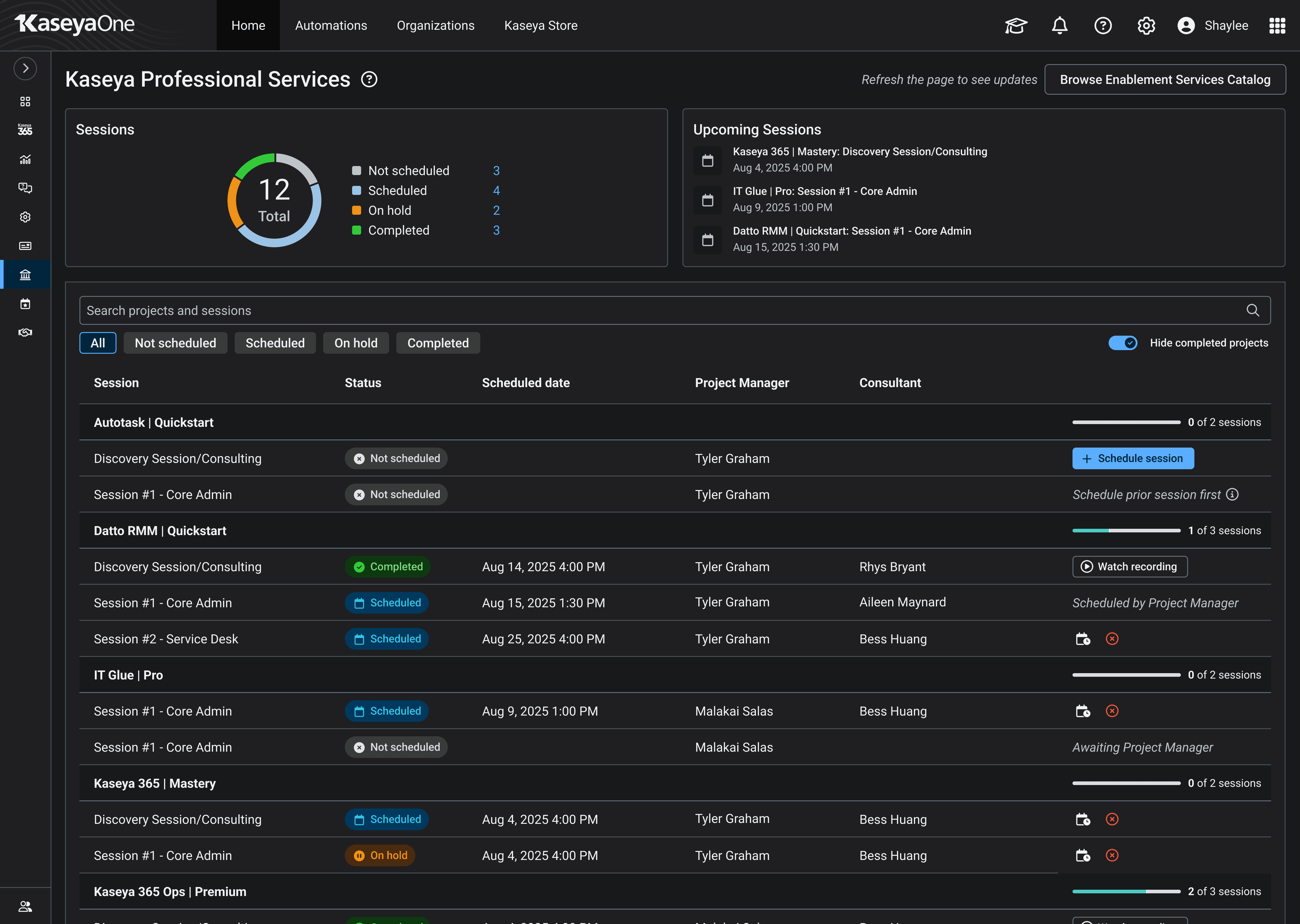
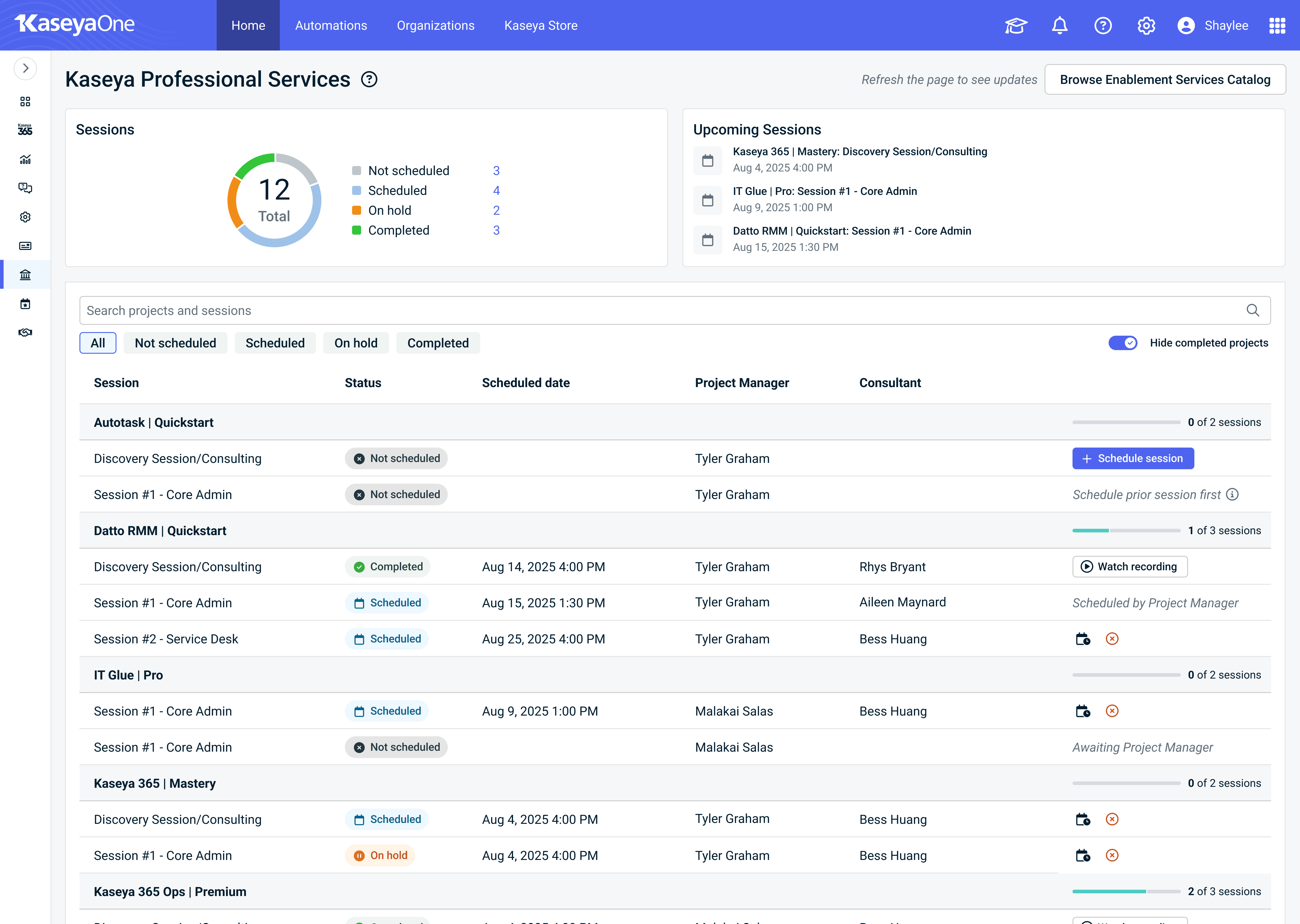
Unifying a fragmented product ecosystem into a single platform
I led design across core KaseyaOne platform experiences, including navigation, identity, organization management, billing, and cross-product workflows. I partnered with product and engineering teams across the ecosystem to define shared patterns that could scale across 40+ products.
Role
Product Designer / Design Manager
Scope
Platform UX, navigation, SSO, org management, workflows
Impact
Unified cross-product experience
Kaseya’s rapid growth through acquisition created a fragmented ecosystem of 40+ products
Growth outpaced standardization — creating a large ecosystem of independent products, each with its own interface, structure, and workflows.
Key challenges
Disconnected experiences across 40+ products
Inconsistent navigation, patterns, and structures
Redundant workflows and duplicated effort
Difficult to learn, use, and scale
Users activated across the platform
Accounts onboarded
Average interactions per user
Fragmented products made the ecosystem harder to use — not more powerful
As the platform expanded, the experience became increasingly inconsistent. Each product worked, but only within its own boundaries. Users were forced to navigate separate entry points, relearn patterns, and piece together workflows across tools that were never designed to connect.
The ecosystem offered breadth, but not cohesion.
The problem wasn’t within products — it was between them
The problem wasn’t within any single product — it existed in the gaps between them. I helped shape the shared platform layer connecting products through consistent navigation, access, and organization-level workflows.
What should a central hub actually answer for users?
Rather than starting with features, I worked with the team to define the core questions the platform needed to answer for users.
When users enter the platform, what are they trying to understand immediately? What should feel obvious without explanation? At its core, the experience needed to answer three things:
What tools they have
How to access them
How to manage their organization across products
These questions shaped the foundation of the platform.
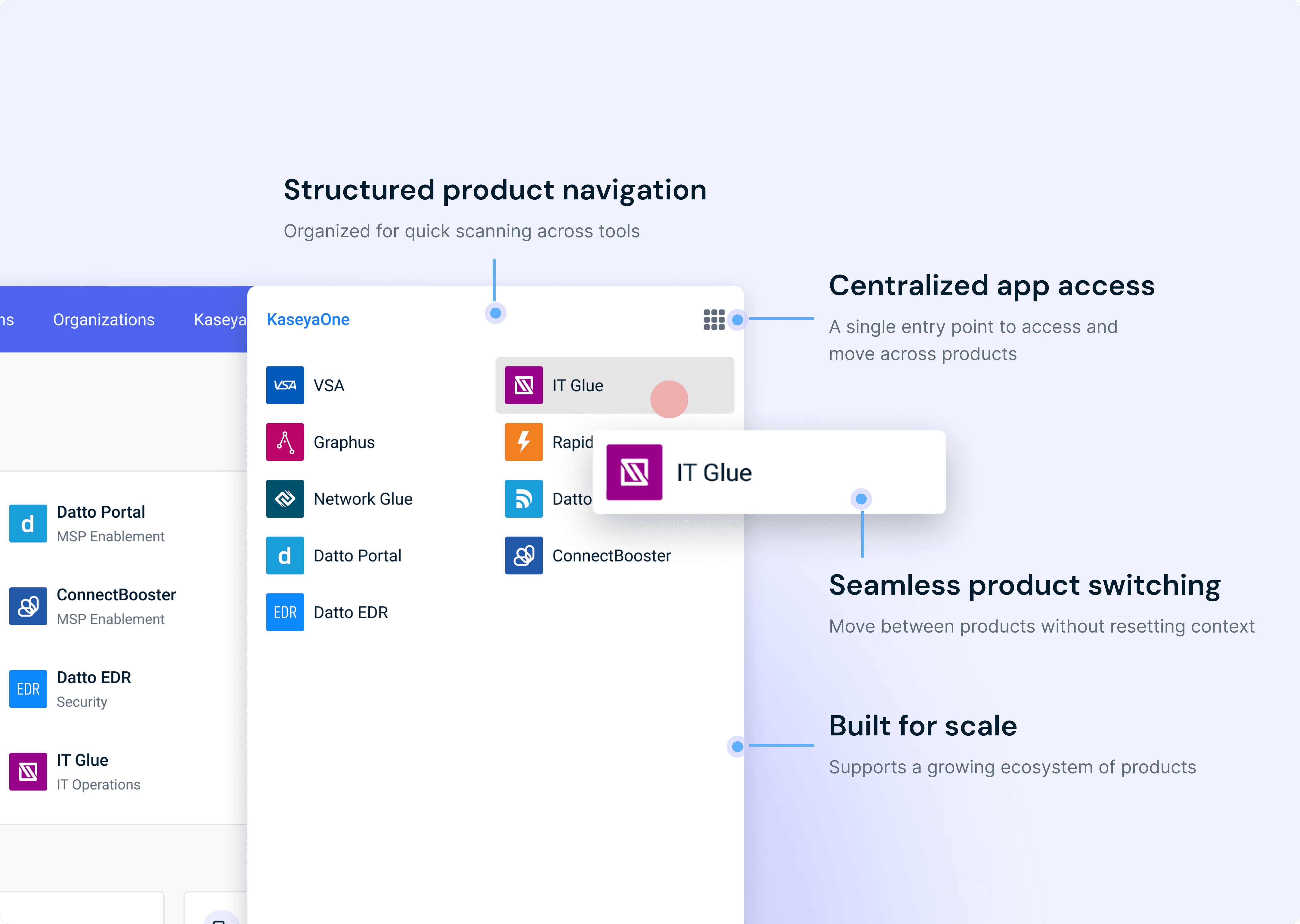
A single entry point into the entire ecosystem
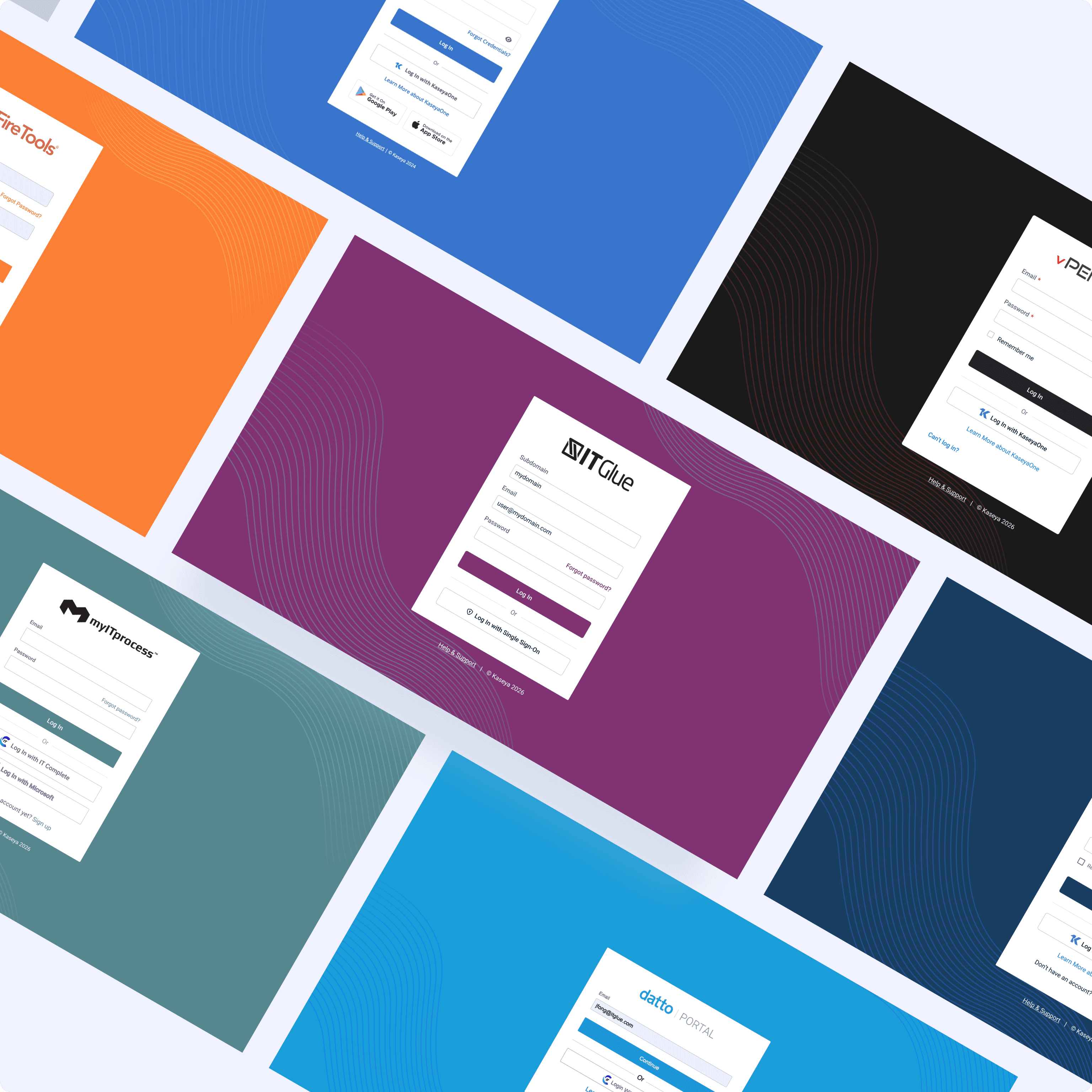
KaseyaOne centralized access across the ecosystem, creating a consistent way for users to enter and move between products.
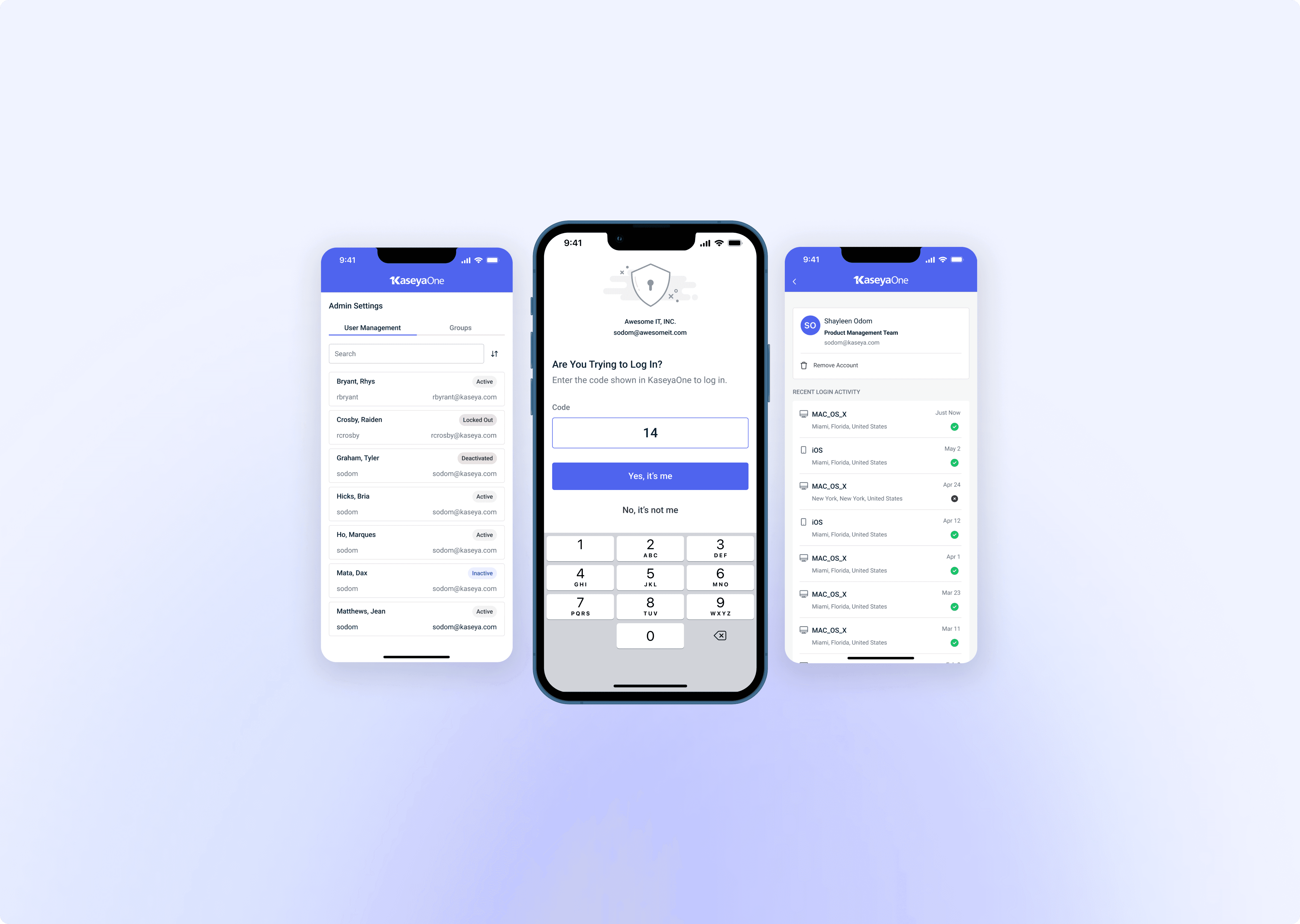
Single Sign-On (SSO) removed friction at entry, allowing users to authenticate once and move across the platform seamlessly.
Unified App Launcher — accessible from every application — made it easier to navigate between tools at any moment without reorienting or re-entering.
To support secure access at scale, we introduced the KaseyaOne Authenticator, providing a consistent layer of multi-factor authentication across all products.
Together, these features allowed users to move through products without resetting context or relearning navigation. The experience shifted from separate tools to a more connected system.
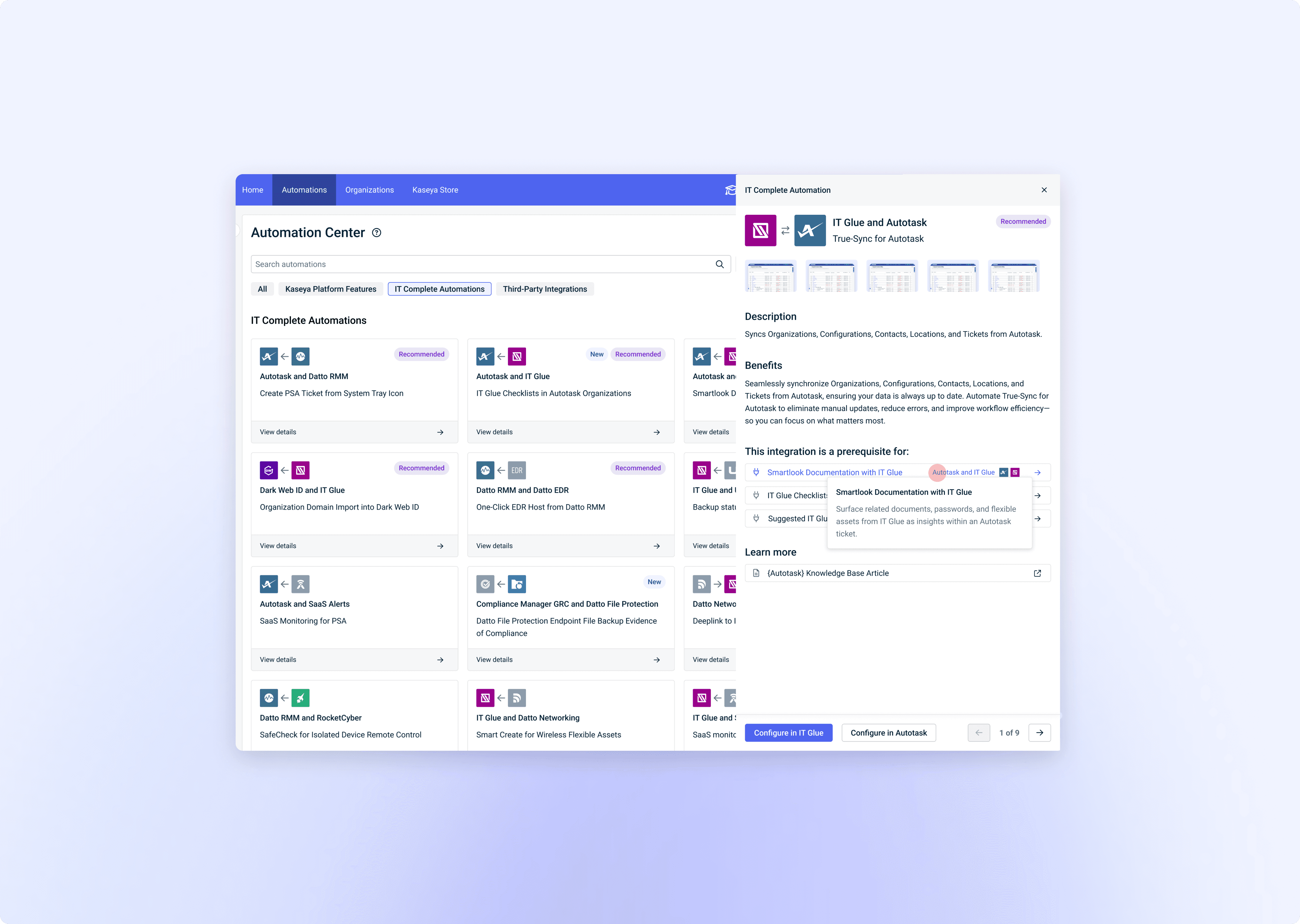
A unified layer for automation, integrations, and organization-level visibility across products
KaseyaOne extended beyond access — it enabled users to operate across products as a single system.
Automation Center brought integrations and workflows into one place, allowing actions to span multiple tools without switching contexts.
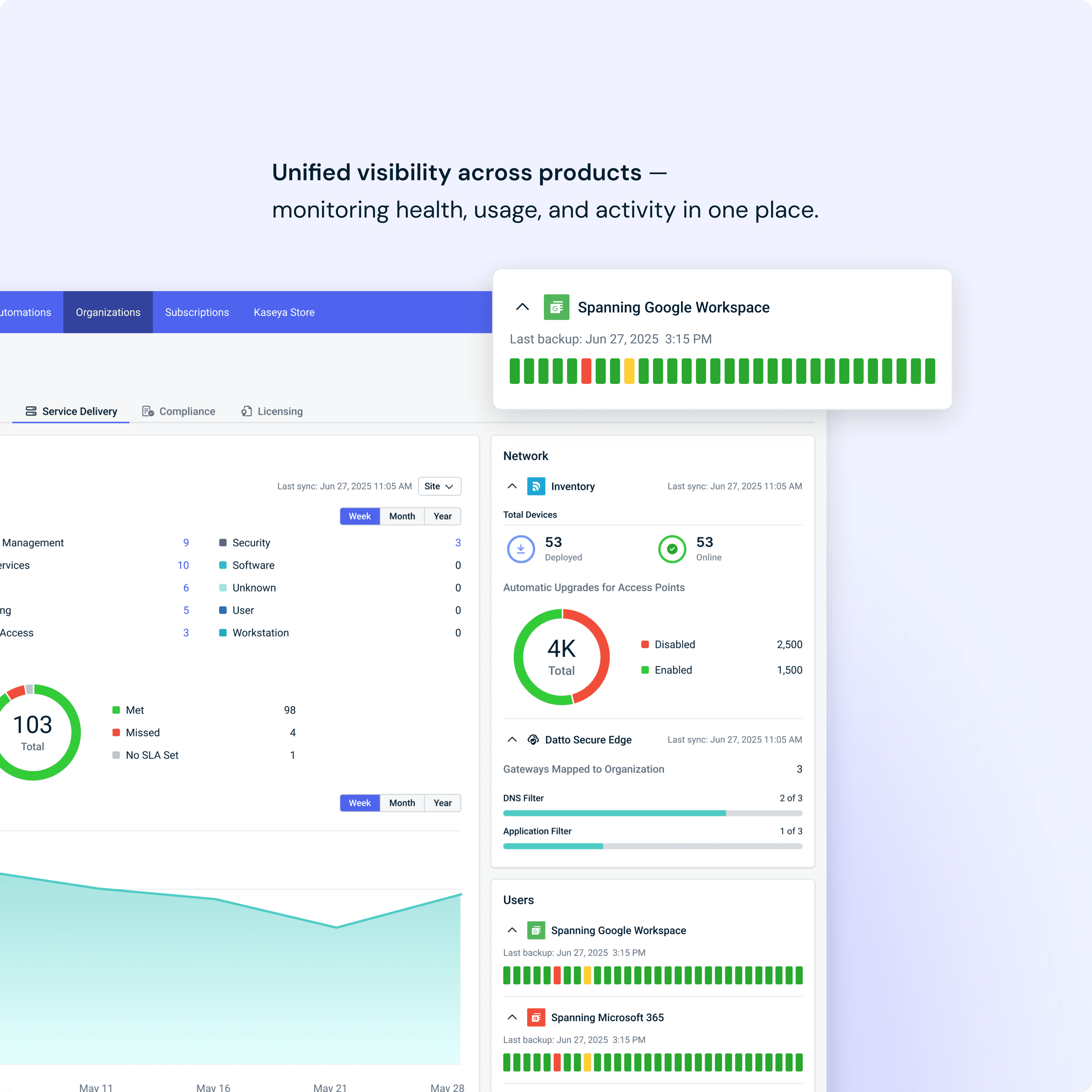
Organization Mapping unified data across modules, giving teams a consistent view of customers, users, and systems regardless of where the data originated.
Rather than managing separate products, users could coordinate work across the ecosystem — turning a collection of tools into an operational platform.
From separate tools to a cohesive system
Before KaseyaOne, products felt independent. After, they began to feel related.
The shift was not just visual — it was structural. Interactions became more predictable, navigation more intuitive, and movement across products more seamless.
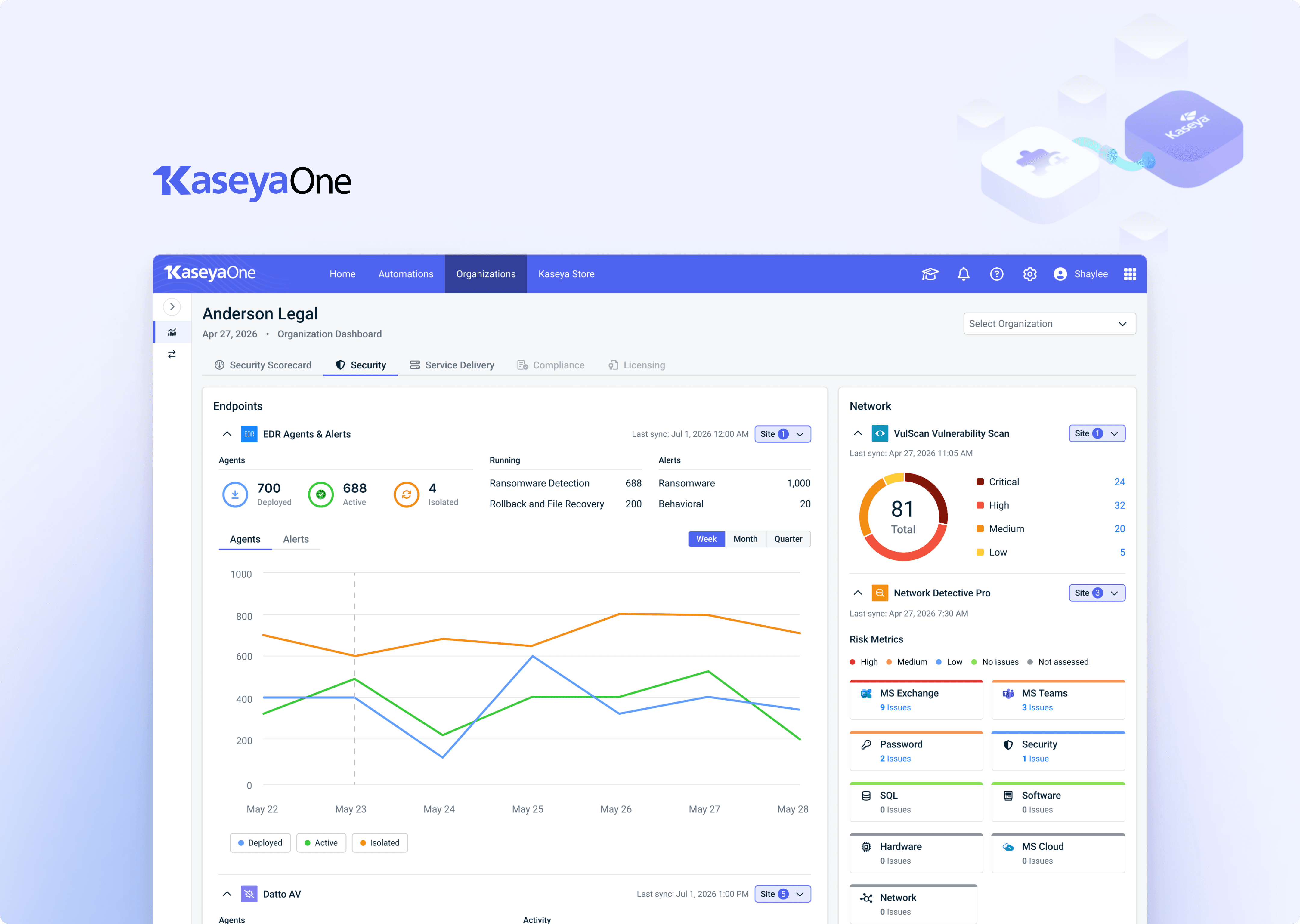
We introduced organization-level dashboards that gave MSPs a clear view of their clients’ health, products, and license usage — bringing visibility that previously lived across multiple tools.
The ecosystem started to feel like one platform, instead of many.
Outcome
KaseyaOne unified Kaseya’s ecosystem into one connected platform — reducing fragmentation and creating a more consistent product experience.
Newly acquired products integrated faster through shared patterns, navigation, and reusable foundations.
Centralized organization and user management streamlined onboarding, offboarding, and account administration across products.
Platform impact
Unified access across 40+ products
Reduced fragmentation across siloed tools
Standardized core navigation and interactions
Accelerated onboarding of new products
Built a scalable platform foundation